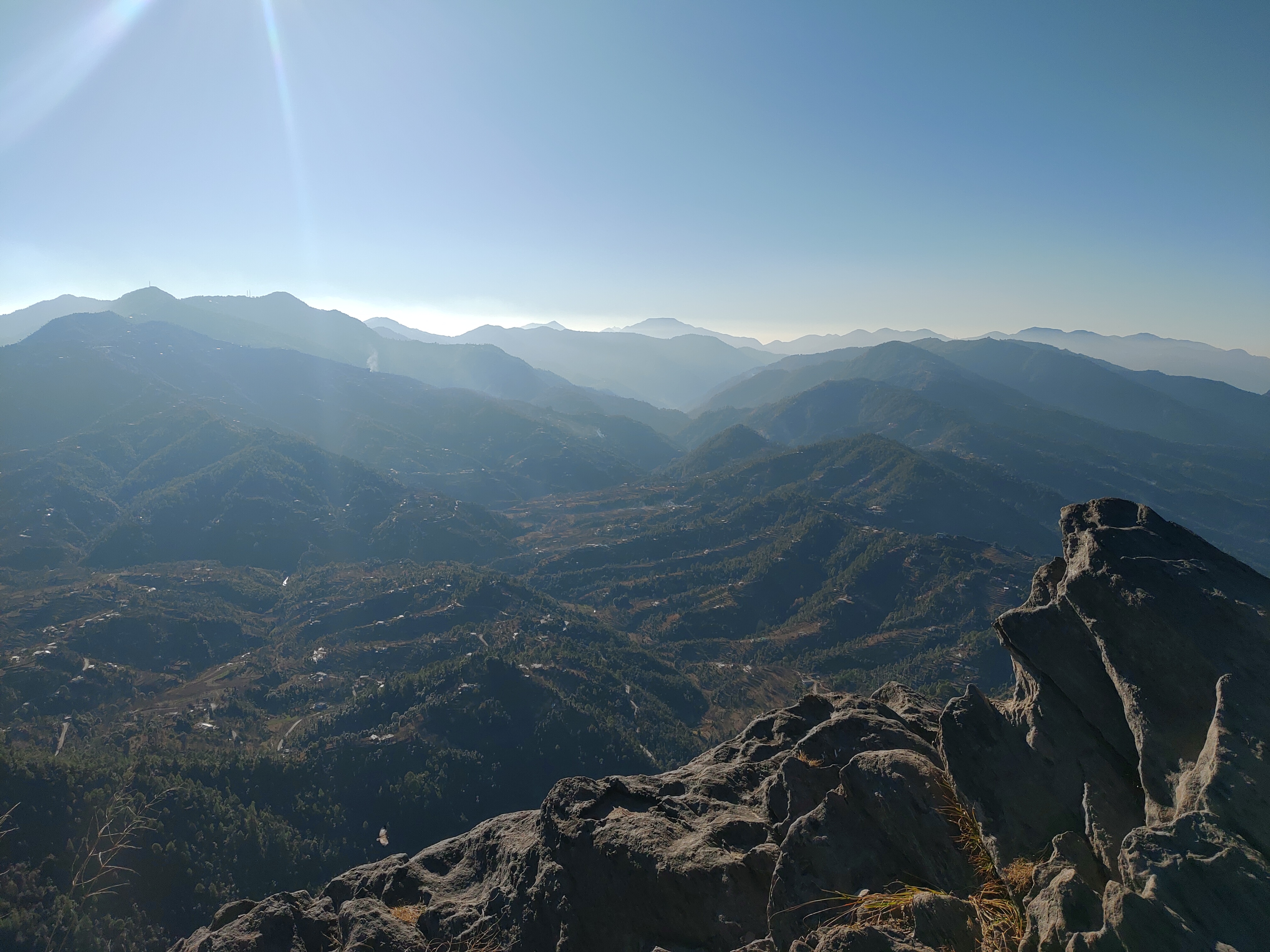
Binsar Wildlife Sanctuary is a 47 sq km patch of broadleaf oak and rhododendron forest on a ridge about 30 km from Almora. It was the summer capital of the Chand kings, and later a British hill retreat; in 1988 it was notified as a sanctuary to protect the oak forests of the central Himalaya.
The forest
Binsar's oak forest is the point. Broadleaf oak — Quercus — is the tree that holds a Himalayan hillside together, and much of it has been cut elsewhere. Inside the sanctuary the canopy is closed and the understory is thick, which is why the bird list runs past 200 species.
Birds and animals
The sanctuary is one of the best birding sites in Kumaon — laughingthrushes, tits, nuthatches, woodpeckers, the koklass pheasant and, if you are lucky, the monal. Leopards and black bears are present; sightings are rare, and you should not walk alone at dawn or dusk.
Zero Point
The road runs along the ridge to Zero Point, at about 2,420 m, which has the widest view in the sanctuary. On a clear day the line of peaks runs from Nanda Devi through Trishul to Panchachuli and Nanda Kot — around 300 km of the high Himalaya.
Visiting
Entry is by permit, issued at the gate; vehicles pay a separate charge. There is no public transport inside, so you need your own vehicle or a local taxi. Accommodation inside the sanctuary is limited and should be booked ahead; Almora and Kausani are the alternatives.
When to go
October to March gives the clearest mountain views. The monsoon is green but often clouded in. Winter brings snow at Zero Point.
Sources & further reading
Compiled from the following public sources. Verify details with the source before relying on them for travel.
Lead photograph: Wikimedia Commons